← All Articles
May 17, 2026
The Rise of Immersive Web Experiences
Beyond 3D – Utilizing Spatial Audio and Haptic Feedback for Brand Engagement 🎧 🖐️
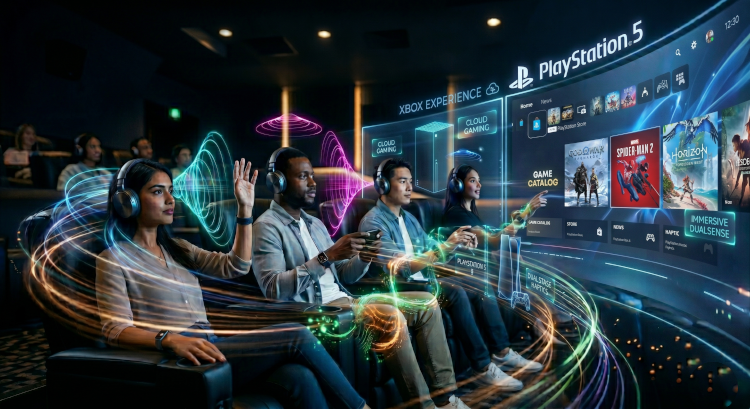
The digital landscape of 2026 is poised to be dramatically different. Static web design, while still relevant, is rapidly losing ground to experiences that engage users on a far deeper, more visceral level. We’re moving beyond simple 3D models and static visuals, and entering an era of truly *immersive* web design – one that leverages advanced technologies like spatial audio and haptic feedback to create brand interactions that feel remarkably real. This isn’t about gimmickry; it’s about fundamentally rethinking how brands communicate and connect with their audiences. It’s about crafting experiences that resonate on an emotional level.
At the core of this shift is spatial audio. Imagine a luxury car brand’s website – instead of a generic background music track, users hear the subtle hum of the engine, the gentle whisper of the wind through the open roof, dynamically adjusting based on their cursor movement and the content they’re viewing. This level of localized sound creates a powerful sense of presence, drawing the user deeper into the brand’s world. Personalized soundscapes, tailored to individual user preferences and browsing behavior, are becoming increasingly sophisticated, driven by AI algorithms analyzing engagement patterns.
But spatial audio is only part of the equation. Haptic feedback – the ability to simulate touch – is rapidly maturing. While full-body haptic suits remain largely a future concept, subtle haptic elements integrated into web interfaces are becoming commonplace. Consider a furniture retailer’s website; users could virtually “feel” the texture of a velvet sofa or the solidity of a wooden table, simply by hovering their mouse over the product image. This adds a critical dimension of sensory detail, significantly enhancing the perceived quality and desirability of the product. It's a game-changer for product visualization.
The integration of these technologies isn’t simply about adding “wow” factors. Strategic implementation is key. Studios need to approach this with a brand-centric mindset, carefully considering how spatial audio and haptic feedback can authentically reinforce brand values and storytelling. A poorly executed integration can feel jarring and intrusive, damaging the user experience. Instead, it should be seamlessly woven into the design, enhancing the core message without distracting from it.
Moving forward, expect to see increased collaboration between designers, audio engineers, and even robotics specialists to refine these technologies. Furthermore, advancements in web browser capabilities and device hardware will continue to unlock new possibilities. The potential for creating truly transformative brand experiences is immense. The future of brand engagement is tactile and auditory.
Ultimately, brands that embrace spatial audio and haptic feedback will be the ones that truly capture the attention of discerning consumers in 2026. It’s a bold move, demanding innovation and a deep understanding of user psychology, but the rewards – in terms of brand recall, engagement, and ultimately, sales – are potentially enormous. 🚀
At the core of this shift is spatial audio. Imagine a luxury car brand’s website – instead of a generic background music track, users hear the subtle hum of the engine, the gentle whisper of the wind through the open roof, dynamically adjusting based on their cursor movement and the content they’re viewing. This level of localized sound creates a powerful sense of presence, drawing the user deeper into the brand’s world. Personalized soundscapes, tailored to individual user preferences and browsing behavior, are becoming increasingly sophisticated, driven by AI algorithms analyzing engagement patterns.
But spatial audio is only part of the equation. Haptic feedback – the ability to simulate touch – is rapidly maturing. While full-body haptic suits remain largely a future concept, subtle haptic elements integrated into web interfaces are becoming commonplace. Consider a furniture retailer’s website; users could virtually “feel” the texture of a velvet sofa or the solidity of a wooden table, simply by hovering their mouse over the product image. This adds a critical dimension of sensory detail, significantly enhancing the perceived quality and desirability of the product. It's a game-changer for product visualization.
The integration of these technologies isn’t simply about adding “wow” factors. Strategic implementation is key. Studios need to approach this with a brand-centric mindset, carefully considering how spatial audio and haptic feedback can authentically reinforce brand values and storytelling. A poorly executed integration can feel jarring and intrusive, damaging the user experience. Instead, it should be seamlessly woven into the design, enhancing the core message without distracting from it.
Moving forward, expect to see increased collaboration between designers, audio engineers, and even robotics specialists to refine these technologies. Furthermore, advancements in web browser capabilities and device hardware will continue to unlock new possibilities. The potential for creating truly transformative brand experiences is immense. The future of brand engagement is tactile and auditory.
Ultimately, brands that embrace spatial audio and haptic feedback will be the ones that truly capture the attention of discerning consumers in 2026. It’s a bold move, demanding innovation and a deep understanding of user psychology, but the rewards – in terms of brand recall, engagement, and ultimately, sales – are potentially enormous. 🚀